
Below are some brief descriptions of ongoing projects in the CEE lab.
Long-term fish community patterns in Rainy Lake
Walleye are a key sportfish in North America and northwestern Ontario, and are a major management focus of several Provincially Significant Inland Fisheries like Rainy Lake. MSc student Eric Randall is working with data from the Ontario Ministry of Natural Resources and Minnesota Department of Natural Resources to investigate long-term trends in Walleye abundance and life history in this fishery.
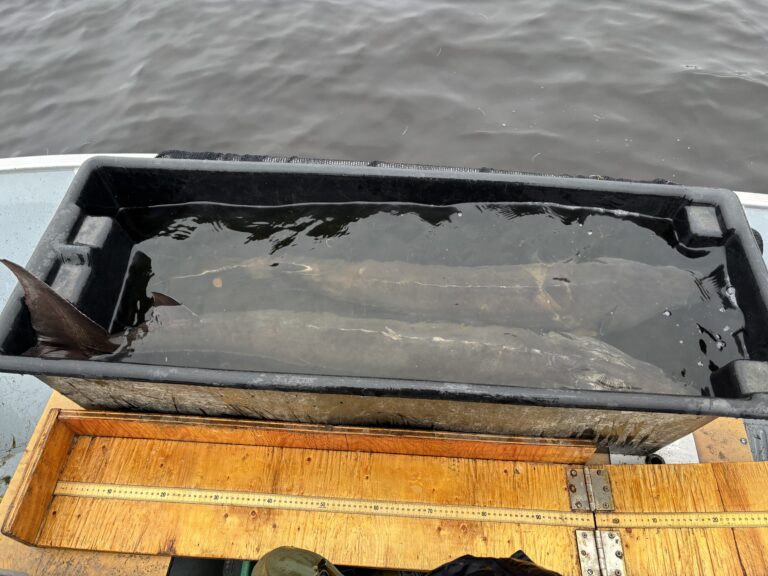
Understanding Lake Sturgeon ecology in unimpacted lakes
While Lake Sturgeon are distributed widely through Canada, many populations have been greatly impacted by overharvest and anthropogenic disturbance. While some research has been conducted on this species, much of it has been focused on populations that are deemed threatened or of concern, raising the question of what a relatively undisturbed population might look like in terms of food web position, trophic ecology and basic life history traits of growth and survival.

CRADLES- investigating impacted lakes to guide rehabilitation efforts
As part of the NSERC Alliance-funded CRADLES project, and building off foundational work by former MSc student Scott Bergson, PhD student Jubayer Alam is investigating downcore patterns of the presence of Lake Trout, Mysis and Wood Frog among lakes in the Sudbury region varying in both their degree of anthropogenic impacts and elevation. This work will help guide restoration efforts of impacted lakes by helping set targets for community restoration, particularly in lakes where anthropogenic impacts predate any background information on past communities.
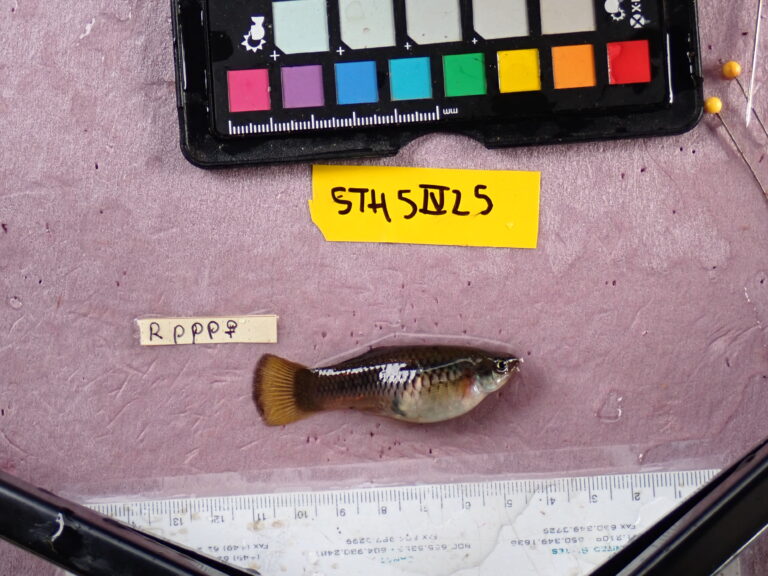
CICHAZ- quantifying growth and survival among hybrid swordtails across environmental gradients
In closely related species, understanding the role of genetic incompatibilities in driving speciation is critical. Often, environmental gradients (i.e. elevation, temperature) are often involved in helping drive these incompatibilities, but their interaction with amplifying or surpressing incompatibilities and/or in shaping hybrid phenology can be difficult to quantify.
Using data from an ongoing long-term experiment, we are investigating the growth and survival of hybrid swordtails grown in experimental tanks along an elevational gradient to understand how environment shapes the phenotype of otherwise genetically identical individuals.
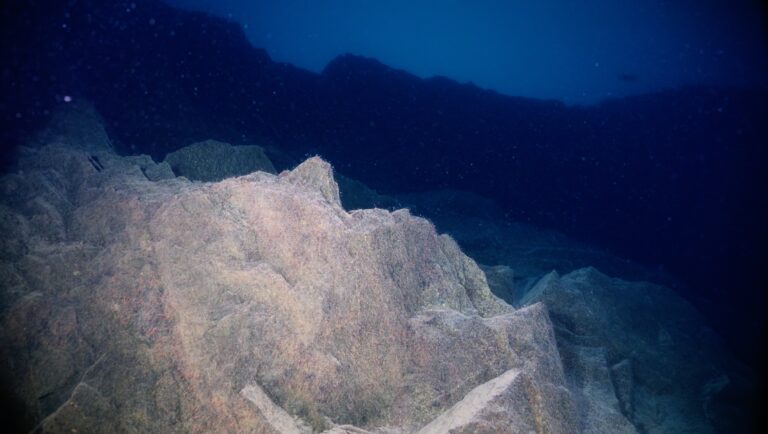
Lakemounts
Lakemounts appear to be major centres of biological diversity and productivity, but very little is known about the potential driving mechanisms for these (to date, largely anecdotal) observations. Recent work with our collaborators has proposed several hypotheses for why these patterns might exist. In September 2025, our group is leading an expedition to Superior Shoals on Lake Superior to begin to quantify the productive capacity of these regions compared to other regions of Lake Superior, and to begin to test some of these proposed hypotheses.
Feedbacks between community structure and predation
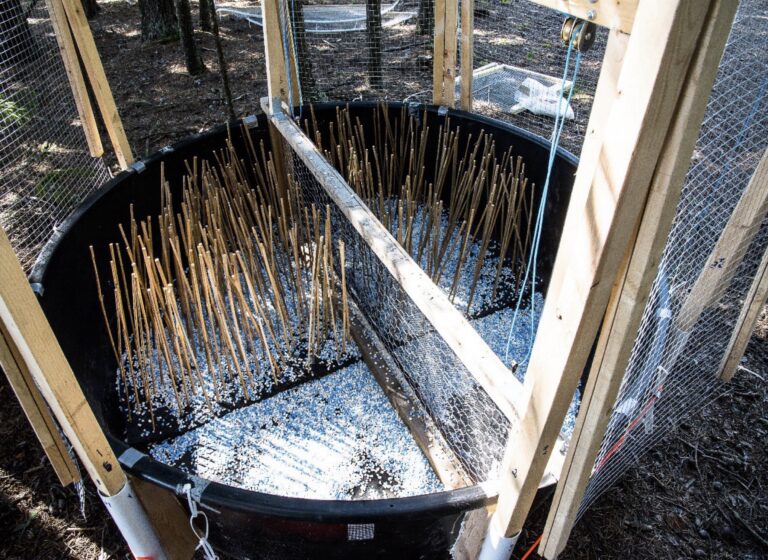
When introduced, predatory fish can have dramatic influences on ecosystems to which they are not native. In our lakes at ELA, pike introductions to predator-naive lakes resulted in a total extirpation of all other fish species. Similarly, research has shown that the presence of particular prey species can greatly influence the growth and energetics of predatory fishes (like the freshwater shrimp, Mysis).
Understanding drivers of species distributions
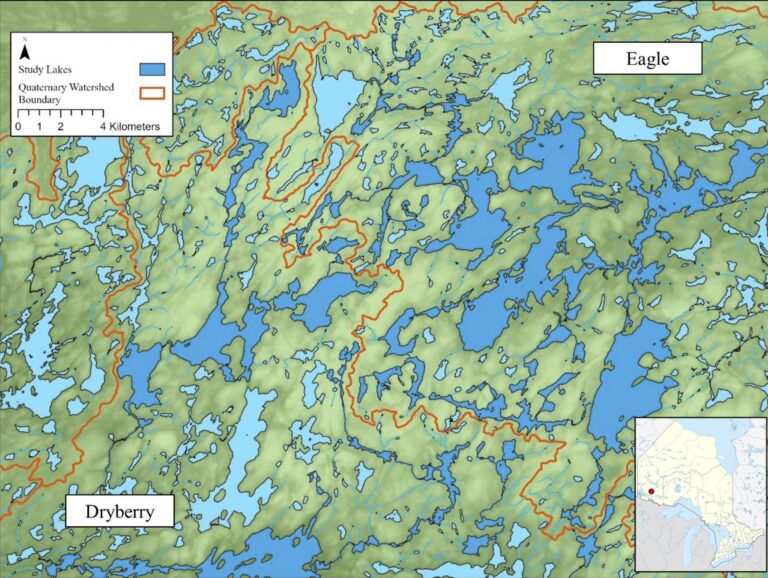
Patterns of species distribution and abundance directly impact the rate, pathways and flow of energy through aquatic ecosystems. As such, understanding the factors that structure aquatic ecosystems is critical in understanding ecosystem function.
Several projects have focused on aspects of species assembly and abundance in the lab. Hannah Hancock evaluated physical habitat associations of northern fish communities.
Microplastic pollution in freshwater
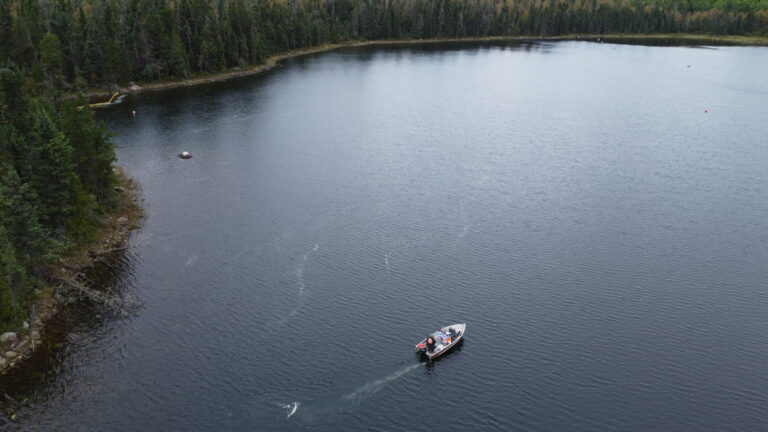
Our research group has been investigating microplastics in freshwater since 2014. Our group was the first to report on the extent of microplastic pollution in Lake Winnipeg, with contaminant levels comparable to those observed on the Laurentian Great Lakes. We also identified Lake Winnipeg as a large potential sink for microplastics. Research conducted by Sarah Warrack at the University of Manitoba investigated the fate and resuspension of several plastic types in wetland mesocosms.
Variation in trophic ecology in Lake Superior
Lake Superior is one of the largest lakes in the world. While it can often be considered a homogeneous entity, in reality there is tremendous variation in the types of aquatic ecosystems it supports, and yet very little is known about how this variation affects rates of energy flow and the sources of energy among food webs.
Fish movement ecology and habitat use
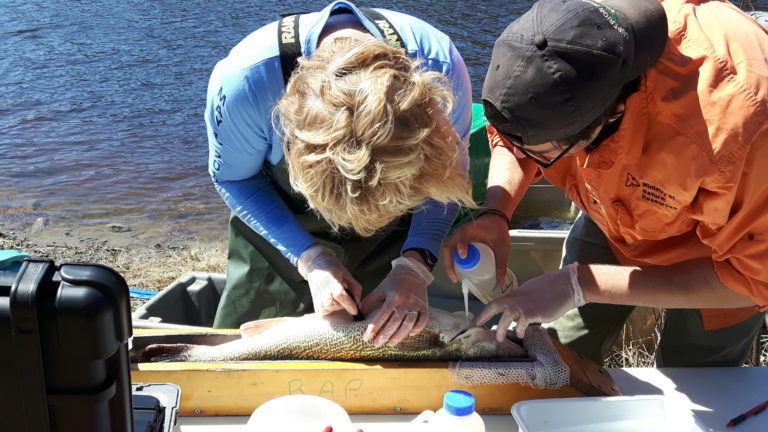
It is becoming apparent that activity, movement and habitat use are a major component of fish life histories, but are rarely accounted for when considering life history relationships and tradeoffs generally.
The walleye population in Black Bay, Lake Superior, crashed in the mid-1960’s and has only shown signs of recovery within the past decade. To evaluate current restoration efforts and their impact on Walleye in Black Bay, we are examining the movement ecology of Walleye along the north shore of Lake Superior.
Predictors of fish productivity in boreal lakes
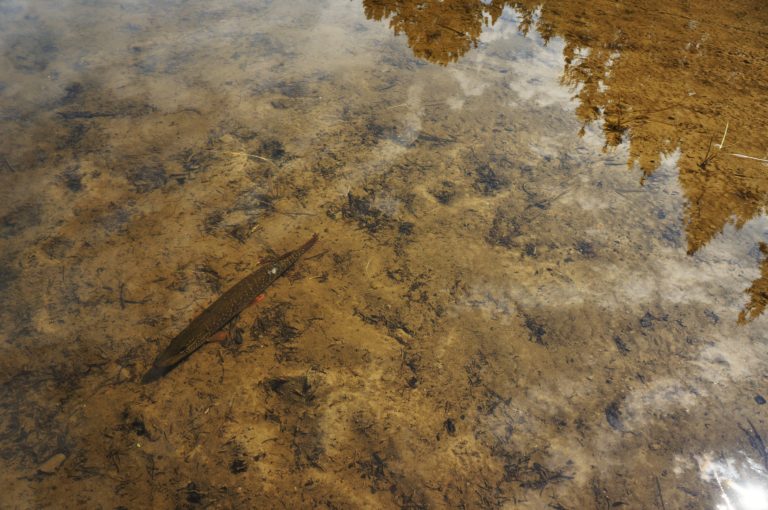
We are using historical data form IISD-ELA on lakes that have undergone disturbance, as well as lakes with gradients of productivity to evaluate correlates and drivers of fish productivity. This is part of a larger effort involving researchers from the IISD-ELA, University of Waterloo, Wilfrid Laurier University and the University of Manitoba. Haley Macleod led this work in our lab, adapting traditional production estimation methods to evaluate the impacts of environmental changes and gradients on fish production.
A SHRRIMP story: Ecosystem restoration through Mysis recolonization
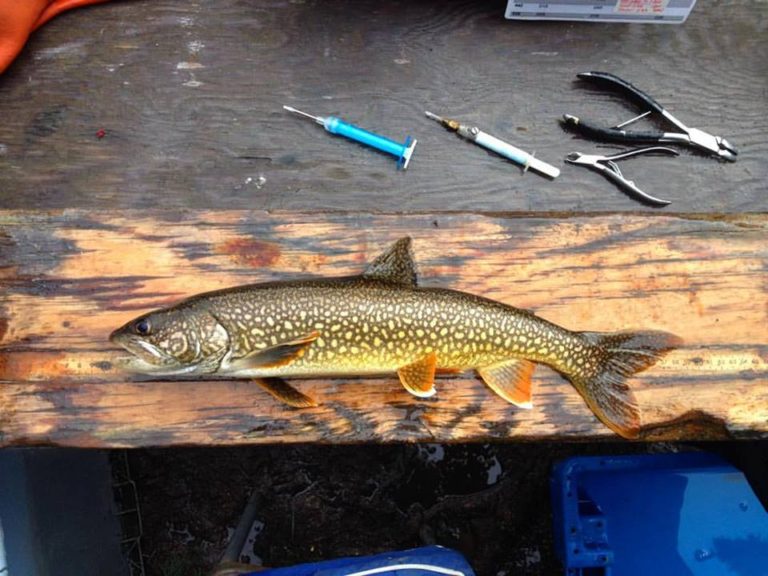
At the IISD-ELA, we have initiated SHRRIMP; the Stenotherm Habitat Restoration through RecolonIzation of Mysis Project.
The freshwater shrimp, Mysis diluvania, occupies many deep, stratified inland lakes on the boreal shield. It is a glacial relict species, and widely considered to be a “keystone” ecological species with regards to it’s effects in shaping zooplankton communities and promoting growth rates in fishes.
Ecosystem-level effects of nanosilver release
Nanosilver is an emerging contaminant with broad potential for environmental release; it is an antimicrobial that is in many, many consumer products and is easily released into wastewater streams through laundry (it’s in clothes, washing machines and detergents). It is clear that nanosilver acts differently on organisms than elemental silver, suggesting that a different set of regulations for environmental release are required.
Impacts of invasive species on aquatic food web structure
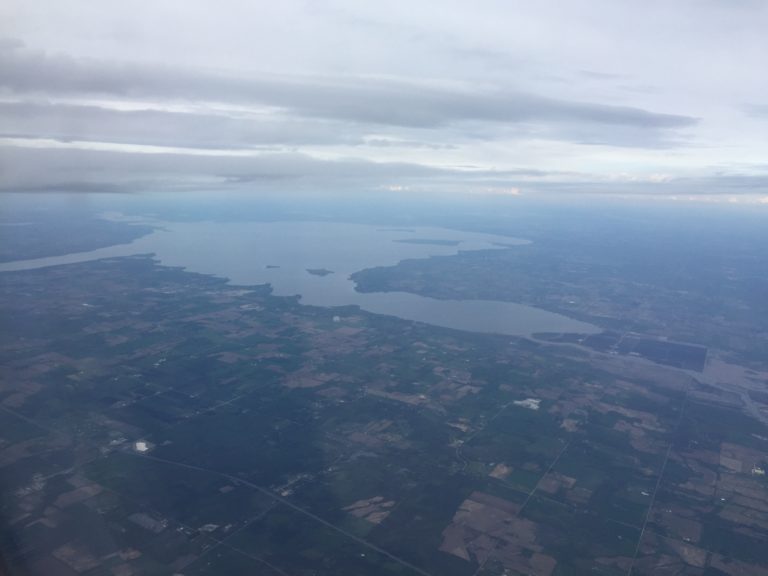
Recent investigations have demonstrated that invasive species (driessenids, Bythotrephes) can have potentially negative impacts on the growth of percid fishes in Minnesota and Wisconsin lakes. Recent research is investigating the impacts of spiny water flea invasion on the growth and contaminant accumulation patterns of Walleye in Quetico Park, with generous support from the Quetico Foundation. This research supported both Danielle Gartshore and Ben Wood.